
Public Liability Insurance is your key to accessing the site. It’s the insurance that covers you if you accidentally cause injury to a person or damage to property while you are doing your job. For a roofer, this is often the core of any insurance strategy. A key concept for public liability insurance is to avoid accepting liability when a claim occurs. Your insurer requires the opportunity to review and defend the situation if it falls within their policy conditions. However, if damage is expected to lead to further damage, “make safe” repairs are often pre-authorised, and if a claim is accepted, any costs can be added to the claim amount. These repairs are not to fix the issues, but to reduce the likelihood of additional damage, and therefore costs, occurring.
Roofing Insurance
What is Public Liability Insurance for Roofers?
Why Roofing Contractors Must Have Public Liability
- Mandatory Site Access: Every builder and major client requires a current public liability certificate before you start work. It’s non-negotiable. Without it, your crew stands idle, applications won’t be accepted, and you lose money.
- Imagine you are carrying a bundle of metal roofing sheets or a box of tiles. You accidentally drop one off the roof. It smashes a client’s brand-new BBQ, hits their expensive air-conditioning unit, or, worst of all, injures a person walking by. Public liability insurance pays for the damage and the legal defense if the person sues you for financial loss.
We secure your cover for the required $10 million or $20 million limit. More importantly, we get your Certificate of Currency to you fast.
Accident & Sickness
Your body is your biggest tool. Every dollar you earn comes from your ability to climb, carry, balance, and work hard. If you lose that ability, even for a few weeks, the money dries up instantly.
You’re moving a heavy sheet of Colorbond on a steep roof. You hit a patch of dew or a loose bit of shingle. You slip. Maybe you catch yourself, but you wrench your knee or tear a tendon in your shoulder.
The doctor says eight weeks of physiotherapy and no ladders.
After two weeks, your financials are struggling. The mortgage is due. The bills are piling up. Workers’ Compensation only covers employees, but you’re an owner/operator or a sole trader, so who pays you? No one.
What is Accident & Sickness Insurance?
Accident and Sickness insurance is a General Insurance product that replaces your weekly income if you are temporarily unable to work due to an accidental injury (like that fall or tendon tear) or a serious illness (like a bad infection or serious health problem).
It’s simple and powerful. However it is not personalised to your financial situation, goals, objectives, or debts. It is general in nature and more of a blanket option compared to other personal insurance products. Due to these reasons they are often more affordable.
- You get injured or sick and have a doctor’s certificate confirming you can’t work.
- After your chosen waiting period (e.g., 14 or 28 days), the insurance starts sending you benefit payments directly to you.
- It pays up to 85% of your regular income enough to keep the house and the bills paid while you focus 100% on healing, or a pre-determined fixed amount which is confirmed at the time of purchase.
Don’t rely on your savings, super, or spouse. Rely on a policy designed to protect your most valuable asset: your health and your ability to work.
Commercial Motor
For a roofer, your Ute, trailer, or light truck is not a family car, it’s a commercial asset. It carries your roof racks, your expensive compressor, your nail guns, and all your materials. Vehicles are necessary but expensive, modern cars are packed with sensors, cameras, and expensive materials, leading to higher claim costs for both third party damage and damage to your own vehicle. What may look like a simple damage to a door can now lead to thousands of dollars of expenses.
When insuring a commercial motor vehicle, you typically choose between Market Value and Agreed Value for your policy.
Market Value is the price your vehicle would realistically sell for immediately before a total loss event, matching the same year, make, model, condition, and kilometres. Meaning the payout amount fluctuates with the depreciation of the vehicle over time. In contrast, Agreed Value is a fixed amount determined at the start of the policy period that the insurer agrees to pay out in the event of a total loss.
However, it is crucial to understand that even when opting for Agreed Value, this figure represents the maximum amount the insurer will pay, setting their limit of liability. The insurer is not guaranteeing the reinstatement of this exact sum, but confirming that the payout will not exceed the agreed amount, less any applicable excesses or deductions for things like outstanding premiums.
Why You Need Commercial Motor Cover
Your personal car insurance policy might refuse to pay out if:
- The vehicle is damaged while carrying high loads, which is common for roofers.
- The vehicle is written off in an accident while you’re travelling between multiple work sites.
- The value of the vehicle includes expensive, permanently attached work equipment like compressors or customised toolboxes.
What Commercial Motor Insurance Covers:
- Vehicle Accident: Covers the cost of repairing or replacing your work vehicle if it’s damaged in a crash.
- Theft: Pays out if your Ute or truck is stolen.
- Third-Party Property: Protects you if your vehicle accidentally damages someone else’s property.
Tools of Trade Insurance for Roofing Contractors
Your tools, your compressors, rivet guns, nail guns, edge protection systems, harnesses, and safety gear are expensive. If they get stolen or destroyed, replacing them means a massive, sudden hit to your cash flow. This policy covers the theft or accidental damage of your portable equipment.
Key Coverage Points for Roofers:
Theft from Locked Storage: Covers the theft of your equipment from a locked container, locked trailer, or locked work vehicle. Evidence of physical entry might be required.
Fire/Storm Damage: If a sudden site fire or severe storm damages your kit, the policy pays the replacement value.
Specific High-Value Items: Ensures your expensive safety equipment and gas-powered nail guns are replaced quickly so you can get back on a compliant site. For higher value items, the individual year, make, model, and value will be required. It is highly recommended to keep on file all receipts and proof of ownership for any item as you may need it to make a claim.
Claim Examples
Here are example scenarios that show exactly when your different policies step in:
Claim Example 1
You are installing new gutters and downpipes. You accidentally cut into the wrong pipe, directing rainwater into the client’s attic over the next few weeks. The resultant hidden water damage causes the ceiling in the living room to collapse months later.
Your Public Liability Insurance handles the complex claim for the collapsed ceiling and the water damage repairs. Your policy covers this potential major financial loss, allowing you to pay your excess and continue working.
Claim Example 2
Working on a wet, tiled roof, you slip and fall a short distance, landing hard on the eaves. You sustain a severe rotator cuff injury that requires surgery and three months of recovery where you can’t lift a tool above your head.
Your Accident & Sickness Insurance activates. After your waiting period, the policy sends you a weekly payment (up to 85% of your income) for the entire three months you are off work, ensuring your family isn’t hit by the financial cost of your recovery.
Claim Example 3
Driving to a job site with a full load of materials, you are involved in a rear-end collision. Your Ute is badly damaged and ruled off the road for four weeks for major repairs.
Your Commercial Motor Insurance covers the cost of the repair. If your policy includes it, it may also cover the cost of a rental vehicle to keep you moving materials to site while your Ute is being fixed, minimising your downtime.
Risk Management Tips for Roofers
Insurance is your financial protection, but these tips and proper policies and procedures are your safety line. Use these simple steps to reduce your risk, prevent falls, and keep your claims history clean.
Proactive Renewal: Don’t wait until the day before the expiry date. Renew your Public Liability weeks early. Send the new Certificate of Currency to all your major builders immediately. This keeps you in their good books.
When you start a new job, ask the builder exactly what the minimum PLI limit they need is (usually $10M or $20M and make sure your certificate matches that. Don’t wait for them to tell you the day before you’re meant to start. Be proactive and allow it to demonstrate your professionalism.
Digital Access: Keep your current certificate saved on your mobile phone’s home screen. Email it instantly when asked.
Serial Number Record: Keep a detailed, digital list of the make, model, and serial number of every power tool and piece of safety equipment you own. This documentation is essential for quick, successful claims. A simple excel spreadsheet is useful for this.
Secure Storage: When the Ute or trailer is on site or at home, always secure tools inside locked metal toolboxes or storage containers. Never leave anything valuable or easily lifted visible in the cab of your vehicle. Insurers will want proof of violent entry to assess a claim.
Use Ground Anchors: If leaving a valuable trailer or container on site overnight, use a wheel clamp or ground anchor lock that makes it extremely hard to move. Thieves target easy pickings.
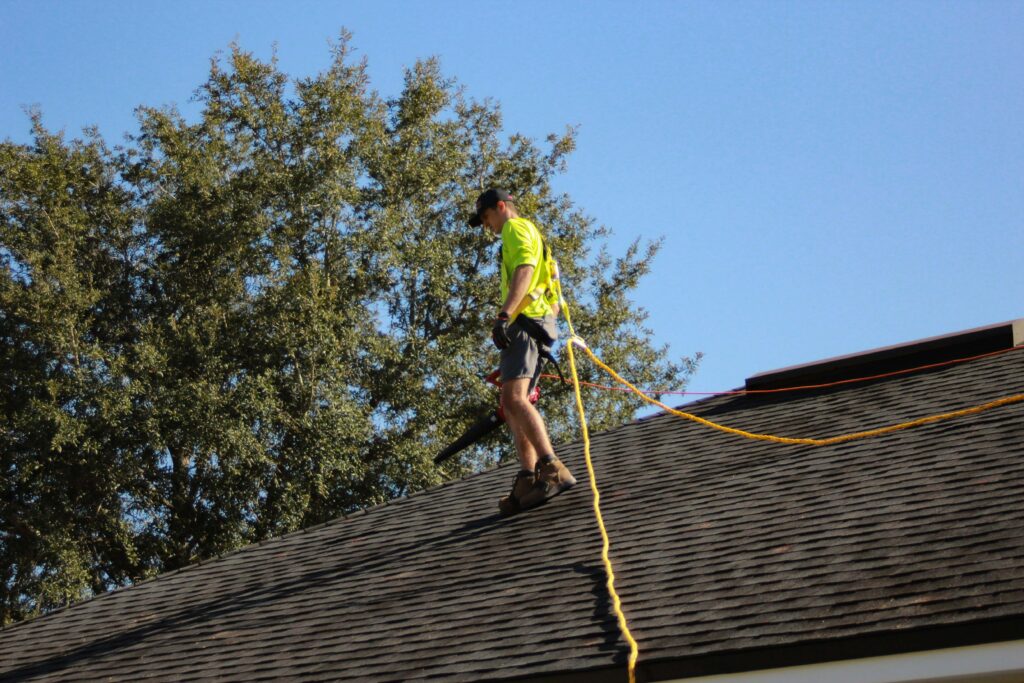
Harnesses & Edge Protection: This is the big one. Never bypass safety gear. Use the edge protection, wear the harness, and ensure all tie-down points are rated. One second of convenience is not worth a lifetime of injury.
Roofing work is weather-dependent. Never risk working in high winds or slippery conditions (rain, hail, heavy dew). Your Accident & Sickness Policy will not help you if you knowingly take reckless risks. Wait for safe conditions.
Always use the three points of contact rule when climbing or descending. Inspect your ladders and scaffolds every morning for damage or instability. A broken ladder is an A&S claim waiting to happen.
If you suffer a strain or injury, follow the doctor’s and physiotherapist’s instructions 100%. Don’t go back to work early just to earn a dollar. Your A&S policy is paying you to recover properly. Rushing recovery leads to worse, longer-term injuries.
Build Your Business on a Solid Foundation
You understand that a roof needs a strong structure and high-quality materials to last a lifetime. Your roofing business and your family’s future need the same solid foundation.
Insurance is not a cost. It is the structure that protects your entire financial life from falling down. It ensures that if a tile drops, a tool is stolen, or a fall puts you out of action, you have the financial support to keep going.
You need fast quotes and strong protection. Click here or call us now for a simple, quick quote on your Public Liability, Tools, Commercial Motor, and Accident & Sickness cover.